
Where Estate Planning and Financial Advising Meet (and What Happens When They Don't)
Short answer: A financial advisor helps you build and manage wealth during your life. An estate planning attorney controls how that wealth transfers, who is in charge, and what legal protections apply afterward. The two plans overlap at beneficiary designations, account titling, retirement accounts, and life insurance. When one professional doesn't know what the other has done, the accounts can end up going somewhere the owner never intended.

The plan that looked complete
Sam, 61, lived in Temecula with his wife, Leila. Years earlier he had worked with an estate planning attorney and signed a living trust. He also had a financial advisor he trusted, who managed his IRA and a brokerage account. Every part of his planning had been done carefully, but the two professionals had never spoken.
When Sam passed away, Leila expected the trust to handle everything. It didn't. His IRA still named his brother as beneficiary, a form he had filled out before he was married. His brokerage account, opened after the trust was signed, was never retitled into it. What he intended and what the paperwork said had drifted apart.
Sam and Leila are fictional, but the pattern is real. It is among the most common ways good plans fall short.
What is the difference between a financial advisor and an estate planning attorney?
They answer different questions about the same money.
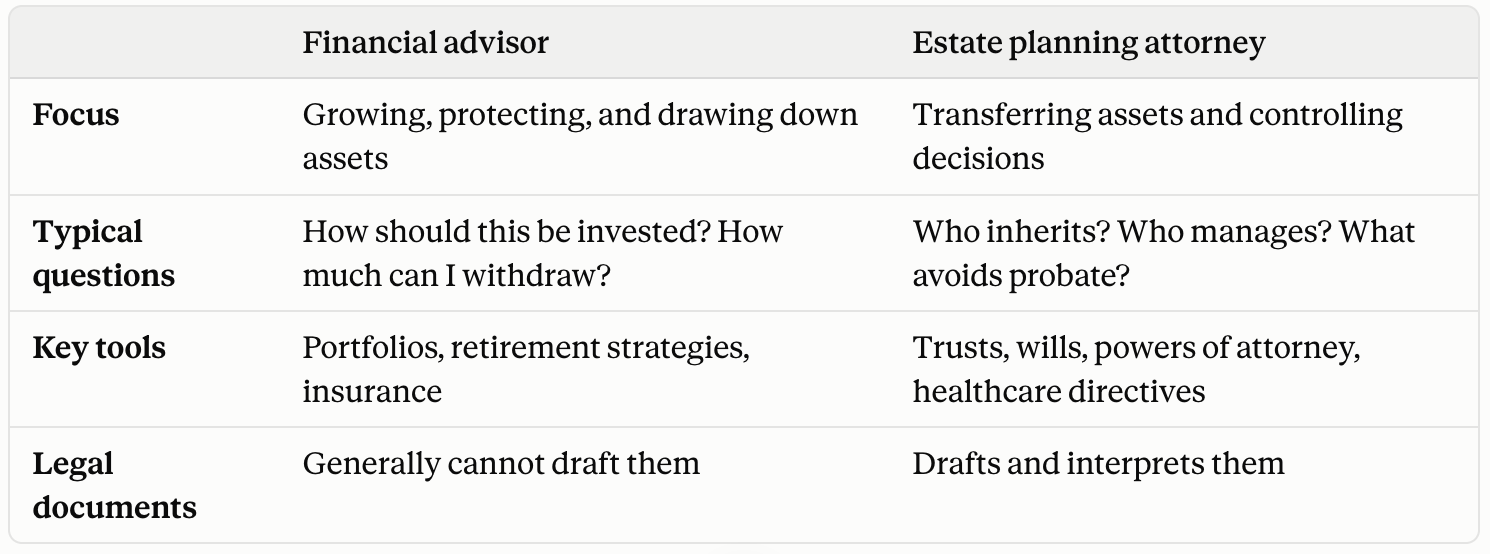
Neither role replaces the other. In California, drafting a trust or will is the practice of law, so it belongs with an attorney. Investment strategy belongs with a financial professional.
Where do estate planning and financial advising overlap?
1. Beneficiary designations. Retirement accounts and life insurance pass to whoever is named on the account's beneficiary form. Under California Probate Code §5000, these transfers happen by contract, outside a will or trust. A trust does not override an outdated form.
2. Account titling. A revocable living trust generally controls only the assets titled in its name or that name it as beneficiary. A brokerage or bank account left in your individual name can still require probate, even if you have a trust.
3. Retirement accounts and the 10-year rule. Under the federal SECURE Act, most non-spouse beneficiaries must generally withdraw an inherited IRA or 401(k) within 10 years of the owner's death. Certain "eligible designated beneficiaries," such as surviving spouses, minor children of the owner, and disabled or chronically ill individuals, follow different rules. Withdrawals from traditional accounts are generally taxable income. Retirement accounts also can't usually be retitled into a trust during life, so naming a trust as beneficiary is a decision that touches both tax and legal planning.
4. Life insurance ownership. Who owns the policy, and who is named to receive it, affects how proceeds are paid and whether they fit the rest of the plan.
5. Major life events. A marriage, divorce, home purchase, inheritance, business sale, or retirement changes both the financial picture and the legal one. In California, property acquired during marriage is generally treated as community property (Family Code §760), which shapes how assets are owned and divided.
What happens when the two plans don't match?
The outcomes are usually quiet, not dramatic. An account goes to someone the owner didn't intend. An asset that was supposed to avoid probate ends up in it. A beneficiary receives a large retirement account on a tighter tax timeline than anyone expected. In Sam's case, Leila may have legal options, but resolving the gap would take time, cost, and difficult conversations with family.
Why does having the full picture matter?
Each professional sees only the part of the plan you show them. The advisor sees accounts and goals. The attorney sees documents and intentions. Only you see both. When they share the same information, the trust, the beneficiary forms, and the investment strategy can all point in the same direction. When they don't, the person most affected is usually the one left behind.
Questions worth asking yourself
Do my beneficiary forms match what my trust or will says?
Does my financial advisor know I have a trust, and does my attorney know what accounts I hold?
Were the accounts I opened after signing my trust ever retitled or updated?
Has anything changed since I last reviewed these forms: marriage, divorce, a new child, a new home, a business sale?
If something happened tomorrow, would the people I named be able to find and access what they need?
Frequently asked questions
Do I need both a financial advisor and an estate planning attorney?
They serve different purposes. An advisor helps manage and grow your assets. An attorney creates the legal structure for how those assets transfer. Many families benefit from having both.
Does a living trust override my beneficiary designations?
No. Beneficiary designations on retirement accounts and life insurance generally control who receives those assets, regardless of what the trust says.
Does having a trust mean my family avoids probate?
Only for assets that are titled in the trust or pass by beneficiary designation. Assets left in your individual name may still go through probate.
Can my financial advisor create a trust for me?
Financial advisors generally cannot draft trusts or provide legal advice. Creating these documents is the work of an attorney.
When is a good time to review my plan?
Many people review both their legal documents and their beneficiary forms after major life events such as marriage, divorce, the birth of a child, buying or selling property, or a change in health.
Talk it through
If you'd like to walk through how your estate plan and your financial accounts fit together, DeCosimo Law offers consultations at our Temecula office.
This article is for general educational purposes and is not legal, tax, or financial advice. Laws change, and every situation is different. Consult a qualified attorney and financial professional about your circumstances.