
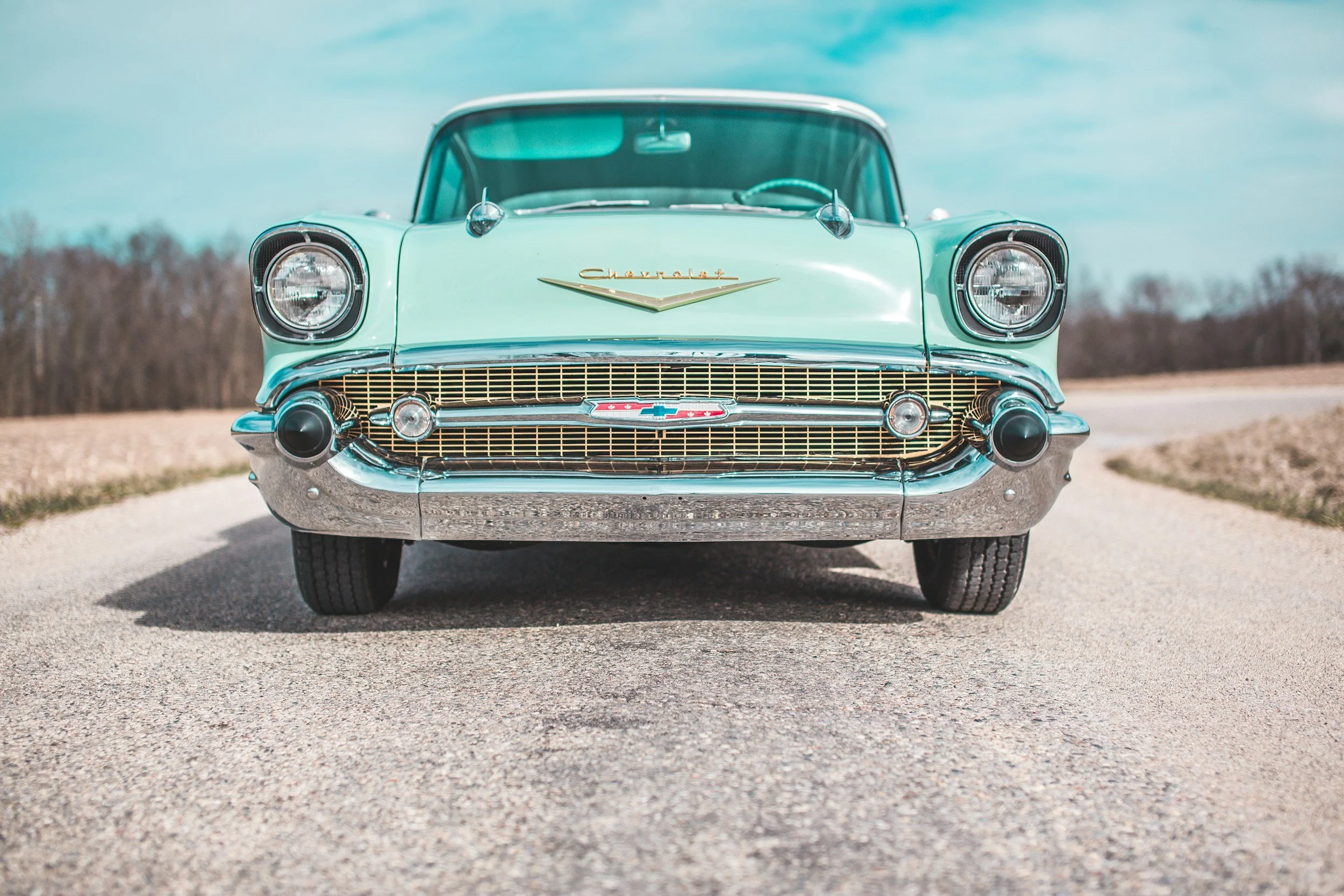
Whether you're the proud guardian of a 1965 Ford Mustang, a cherry-red 1969 Camaro, or a meticulously preserved pre-war Packard, you've invested far more than money. You've invested time, sweat, and a love for automotive history that most people simply don't have a word for. The last thing you want is for that investment — and that legacy — to end up in the wrong hands, stuck in probate court, or sold for a fraction of its worth at an estate sale.
The good news: 2026 has brought some genuinely significant changes to California's estate planning landscape — including changes that directly affect collectors. Some of those changes work in your favor. Others demand immediate attention. Let's pop the hood on all of it.
The Big 2026 News: The Estate Tax Exemption Cliff Never Happened
If you spent any of 2024 or early 2025 worried about the looming "sunset" of the Tax Cuts and Jobs Act — which was projected to slash the federal estate tax exemption from nearly $14 million down to roughly $7 million per person — you can breathe easy. The sunset never happened.
The One Big Beautiful Bill Act, signed into law on July 4, 2025, permanently eliminated the TCJA's expiration clause. As of January 1, 2026, the federal estate tax exemption is $15 million per individual — or $30 million for married couples using portability. Unlike the old TCJA provision, this new level is permanent and indexed for inflation going forward, meaning it will continue to grow each year.
For most California car collectors, this is excellent news. If your estate — including your home, retirement accounts, investment accounts, and that gleaming collection in the garage — totals less than $15 million, you currently have no federal estate tax exposure at all. That gives families significant runway to focus their estate planning on the things that matter most: making sure the right person gets the right car, avoiding the delays of probate, and protecting assets from unexpected long-term care costs.
A permanent exemption doesn't mean a permanent excuse to skip planning
Even with the estate tax off the table for most families, there are still important reasons to have a well-structured plan: avoiding probate, protecting assets from Medi-Cal recovery, ensuring specific vehicles go to specific people, and maximizing the stepped-up basis advantage for appreciated collectibles. The exemption answers one question — it doesn't answer all of them.
Why Classic Cars Are Different From Every Other Asset You Own
Your savings account has a clear dollar balance. Your house has a Zillow estimate. But what's a 1932 Ford Deuce Coupe worth? That depends on its provenance, condition, who's buying, and whether it's a numbers-matching original or a resto-mod. Classic cars occupy a uniquely tricky corner of estate law precisely because their value is subjective, volatile, and often poorly understood by the people who inherit them.
"Everybody knows what to do with inherited money — they don't know what to do with cars."
That observation, from attorney John Draneas who writes frequently on collector-car legal issues, captures the essential problem. Even heirs who love and admire your collection may feel overwhelmed by the responsibility of caring for it, insuring it, storing it, or selling it. And heirs who don't share your passion? They're walking in completely blind.
Unlike a house or a brokerage account, a classic car cannot simply be split among three children. Its value determines how executors allocate other assets fairly — which means an accurate, current appraisal isn't a luxury, it's a legal necessity.
The Stepped-Up Basis: The Best Tax Break for Collectors You've Never Heard Of
Here's where estate planning for car collectors gets genuinely exciting (yes, we said exciting — stick with us).
Collectible cars sold during your lifetime are subject to a federal capital gains tax rate of 28% — higher than the standard long-term capital gains rate for most other assets. So if you bought a Lamborghini Miura 30 years ago for $100,000 and sell it today for $950,000, you owe tax on that $850,000 gain. That's a significant bill that comes out of your pocket before a dollar goes to your family.
But here's the twist: if that same Miura passes through your estate to an heir, the heir's cost basis is not what you originally paid — it's the appraised fair market value at the date of your death. If the car appraises for $950,000 at that time and your heir sells it for $950,000, they owe zero capital gains tax on that $850,000 gain. It's called a "stepped-up basis," and for high-value collectibles, it can represent enormous tax savings for your family. The good news: the basis step-up rules remain unchanged under the 2026 legislation.
Don't sell the car — pass it on
For highly appreciated collector vehicles, the stepped-up basis at death is often one of the most powerful wealth-transfer tools available. If you're thinking about selling a valuable classic, speak with an estate planning attorney first. In many cases, holding the vehicle and transferring it through your estate will save your family far more than a lifetime sale would gain you — and with a $15 million federal exemption in place, there's rarely a tax reason to sell early.
The Medi-Cal Wildcard: A New Threat to California Estates in 2026
Here is the 2026 change that doesn't come with a press release and a bow on top — the one that catches families off guard, especially those with meaningful collections or real property.
As of January 1, 2026, California reinstated strict asset limits for long-term care Medi-Cal eligibility. For several years, California had temporarily removed the asset test for older Californians needing skilled nursing care. That flexibility is now gone. To qualify for long-term care Medi-Cal today, an individual may hold no more than $130,000 in countable assets, and a married couple no more than $195,000 (plus certain exempt assets like a primary home and one vehicle).
What counts as a "countable asset"? Checking and savings accounts, brokerage accounts, second vehicles, investment properties, and most liquid assets. Your primary car is exempt — but your second classic in the garage may not be. And the new rules also carry a lookback period: transfers made after January 1, 2026 can trigger delays or disqualification from coverage if you apply for long-term care Medi-Cal within a certain window.
A classic car collection — even one that isn't particularly large by collector standards — could push a Medi-Cal applicant's countable assets over the $130,000 limit. If you or a loved one might need long-term care within the next several years, review how your vehicles are titled and classified now, before it becomes urgent. This is exactly the kind of nuanced planning that requires an experienced estate attorney.
How California Handles Classic Cars After You're Gone
California is a fascinating — and occasionally frustrating — state when it comes to asset transfers at death. The good news for collectors is that California offers several pathways to transfer vehicles without the full weight of probate court bearing down on your estate.
The REG 5: California's Small Estate Shortcut
California's small estate threshold for personal property — including vehicles — stands at $208,850 as of 2026. Heirs of estates valued under this threshold can file a REG 5 affidavit (Affidavit for Transfer Without Probate) directly with the DMV, skip probate court entirely, and complete the title transfer in as little as 8 to 10 business days. There's a mandatory 40-day waiting period after the date of death before filing, but after that the process is relatively straightforward.
For a single classic car of modest value, this can be a simple and inexpensive solution. For a garage with multiple high-value collectibles? It almost certainly won't be enough on its own.
Transfer-on-Death (TOD) Designation
California allows vehicle owners to name a beneficiary directly on the car's title using a Transfer-on-Death designation. When you die, the vehicle passes automatically to the named person — no probate, no court, no delay beyond the usual paperwork. It's clean, simple, and often overlooked by collectors who spend more time thinking about carbs than legal documents.
One important limitation: a TOD designation does not override a lien. If you still owe money on a vehicle, your beneficiary inherits the debt along with the chrome.
Living Trust: Still the Gold Standard
For anyone with a meaningful collection — even just one or two significant vehicles — a revocable living trust remains the most flexible and reliable tool available. California's new transfer-on-death deed rules for real property and the AB 2016 probate shortcut are useful, but California estate planning attorneys consistently confirm the tried-and-true living trust is still simpler and more reliable than the alternatives. When a vehicle is titled to a trust, the trustee can transfer ownership at death without probate, with no court involvement and no mandatory waiting periods beyond what the trust itself specifies.
A trust also allows you to specify exactly who gets which car, under what conditions, and whether the vehicle should be sold or retained. You can include care instructions, preferred mechanics, and storage requirements. You can build in conditions — "my 1967 Mustang goes to my son David, provided he maintains it in running condition." It is, in short, the most powerful tool for ensuring your legacy outlasts your keys.
California vs. the Rest of the Country: A Quick Comparison
If you store vehicles in multiple states, travel with your collection, or have family in different parts of the country, it's worth understanding that the rules vary significantly across state lines.
| State | TOD Vehicle Title? | Small Estate Threshold | Notable Notes |
|---|---|---|---|
| California | Yes | $208,850 | REG 5 affidavit; 40-day wait; TOD available; Medi-Cal asset limits reinstated 2026 |
| Texas | Yes | $75,000 | Affidavit of Heirship (VTR-121) for vehicles under threshold; no state income or estate tax |
| Colorado | Yes | Varies | TOD form DR 2009 through DMV; strong collector-friendly options |
| Florida | No | Varies | No TOD option for vehicles; surviving spouse transfer, Summary Administration, or full probate required |
| New York | No | $50,000 | No TOD vehicle designation; probate or voluntary administration required; state estate tax applies |
| Pennsylvania | No | $50,000 | No TOD; inheritance tax applies; PennDOT Form MV-1 required |
| Michigan | No | Varies | Transfers through estate; letters of authority from probate court required |
California collectors are relatively well-served compared to states like Florida or New York, where vehicles must navigate full probate with no TOD shortcut available. But "better than average" is not the same as "effortless" — especially when Medi-Cal's reinstated asset rules create new complexity around how vehicles are held and titled.
The Appraisal Problem: What Is That Car Actually Worth?
Here's a scenario that plays out more often than you'd think: a trustee opens a garage and finds a classic vehicle under a tarp. It might be worth $15,000. It might be worth $150,000. Without a current, professional appraisal, nobody knows — and courts, accountants, and the IRS all need a defensible number.
For estate purposes, vehicles are valued at fair market value as of the date of death. Even if a prior appraisal exists, market shifts, changes in vehicle condition, or newly discovered documentation can render it outdated. For estates that must formally document vehicles valued over $5,000, a professionally prepared appraisal is not optional — it's the legal foundation on which everything else rests.
Good starting points for valuation include automobile clubs, marque-specific organizations, auction houses like RM Sotheby's or Hagerty, and certified appraisers who specialize in collector vehicles. The appraisal should document condition, provenance, and current comparable sales — not just a Kelley Blue Book number that was never designed for a 1939 Lincoln Zephyr.
The car under the tarp
One estate attorney recounts discovering a Harroun from the early 1900s — one of the rarest American automobiles in existence — under a tarp in a client's garage during trust administration. Finding a buyer took months; ultimately Sotheby's agreed to auction it. In another case, a non-running WWII Jeep sat in limbo while the estate searched for specialists who could properly value it. Both situations could have been largely resolved with a documented inventory and a pre-selected auction arrangement — two simple steps any collector can take today.
Keeping the Family from Fighting Over the Keys
If one heir is a lifelong car enthusiast and the other three couldn't tell a carburetor from a crankshaft, equal doesn't always mean fair. An estate plan that simply divides everything into equal shares can inadvertently create conflict when some assets are unique, indivisible, and wildly unequal in sentimental value.
The most effective solution is explicit: if a collector car worth $100,000 is designated to the child who appreciates it, the other children's shares of the estate should be adjusted accordingly. This requires advance planning, current valuations, and clear language in your estate documents.
A written list in your estate documents designating who gets each specific item is one of the simplest things you can do — and one of the most powerful for keeping families whole.
A "collectibles schedule" — a written addendum to your trust that describes each vehicle and names its intended recipient — is a simple but powerful tool. It can even include guidance on maintenance, storage, and what to do if the named recipient doesn't want it or predeceases you.
A 2026 Checklist for California Car Collectors
- Get a current professional appraisal for every vehicle worth more than $5,000, and update it every 3–5 years or after major restoration work. The 28% capital gains rate makes an accurate date-of-death valuation especially important.
- Revisit your estate plan in light of 2026 changes — the permanent $15 million federal exemption, the Medi-Cal asset limit reinstatement, and California's updated probate rules all affect prior plans. An estate plan from 2020 or earlier may no longer perform as intended.
- Review vehicle titles with Medi-Cal in mind — if you or a spouse might need long-term care, understand that vehicles beyond your primary car could be counted as assets, and transfers made now may be subject to a lookback period.
- Consider a revocable living trust — title each vehicle to the trust to avoid probate entirely and gain full flexibility over who gets what and under what conditions.
- Add TOD designations on vehicles not held in trust, naming specific beneficiaries through the California DMV.
- Create a collectibles schedule that explicitly names who receives each vehicle and what should happen if they decline or predecease you.
- Understand the stepped-up basis advantage before selling any appreciated collector vehicle during your lifetime — it may be far more tax-efficient to hold and transfer through your estate.
- Address specialty insurance in your planning — collector car policies don't automatically transfer, and heirs may not know to contact the right insurer.
- Pre-arrange with an auction house if you expect the collection will be liquidated, so heirs aren't scrambling to find specialty buyers under pressure and time constraints.
- Update beneficiary designations and successor trustees — people's circumstances change, children grow up, prior choices may have moved or lost touch. An annual review keeps your plan current.
- Talk to your heirs — tell them what you own, what it's worth, and what you'd like done with it. Surprises in estates are rarely pleasant ones.
The Bigger Picture: Legacies That Run on More Than Gasoline
Classic cars are perhaps the most dramatic example of what estate planners call "tangible personal property with unique value" — but the same principles apply to vintage motorcycles, antique furniture, original artwork, rare coins, and any other collectible that carries meaning beyond its market price.
These objects hold stories. They carry the fingerprints of the people who built them, restored them, and loved them. The car show we attended reminded us why people fall in love with these machines in the first place: the gleam of chrome in afternoon light, the throaty idle of a well-tuned V8, the sense that this object was crafted by human hands and has survived decades as a testament to a kind of care the modern world rarely produces anymore.
That's worth protecting. And in 2026, there are more tools to protect it than ever before — a permanent federal exemption, simplified California probate procedures, TOD designations, and the enduring reliability of a well-drafted living trust. The framework is genuinely good. But it only works if you actually use it.
California estate planning is more dynamic than it's been in years. The law changed substantially in 2025 and again at the start of 2026. If you haven't reviewed your plan recently, now — not eventually — is the right time.
Don't let a missing signature on a form be what brings your legacy to a grinding halt.
Ready to protect what you've built — and what you love?
DeCosimo Law helps California families and collectors plan with confidence. Let's talk about your estate — and your collection.
Schedule a Consultation