
What is a legacy letter?
One of the most treasured gifts I have ever received was not expensive.
It was not jewelry.
It was not money.
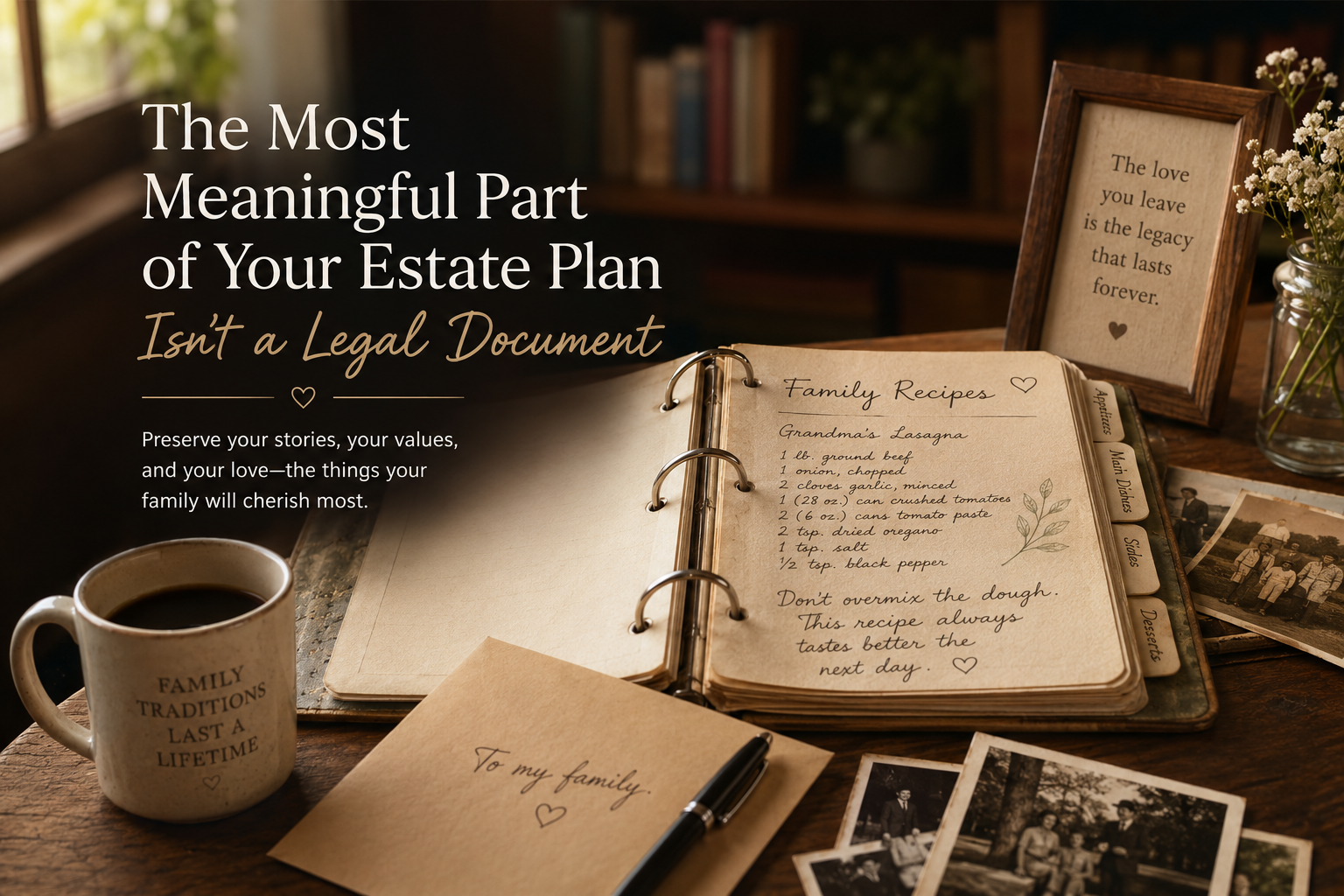
It was a handwritten cookbook.
One Christmas, my grandmother gave each of her daughters and granddaughters a three-ring binder she had lovingly assembled by hand. Inside were our family’s recipes, holiday traditions, cooking tips, and little notes that only she could have written.
As you turned the pages, you could almost hear her voice explaining how to prepare one of her famous dishes—or reminding you that “a little extra cinnamon never hurts.”
Years later, I still treasure that binder.
The recipes are wonderful, but that is not the primary reason it means so much to me. I treasure it because it preserved a part of my grandmother that no legal document ever could.
It captured her personality, her traditions, and the love she poured into bringing our family together around the table.
As an estate planning attorney, that gift has stayed with me because it illustrates something I wish more families understood:
Your greatest legacy is not limited to the assets you leave behind. It also includes the parts of yourself that only you can preserve.
Your Estate Plan Explains “What”
When most people think about estate planning, they think about wills, trusts, powers of attorney, and advance health care directives.
Those documents are essential. When properly prepared and maintained, they can protect your loved ones, provide guidance during incapacity, reduce unnecessary court involvement, and help ensure that your wishes are carried out.
They answer important questions such as:
Who should inherit my assets?
Who should serve as my successor trustee?
Who should manage my finances if I become incapacitated?
Who should make health care decisions for me?
Whom do I nominate to care for my minor children?
How and when should an inheritance be distributed?
Every comprehensive estate plan should address these questions clearly.
But legal documents are not designed to explain your heart.
They do not tell your children how proud you are of them. They may not explain why you selected one person to serve as trustee rather than another. They do not preserve your favorite family stories, recipes, traditions, or life lessons.
That is where a legacy letter can become so meaningful.
A Legacy Letter Explains “Why”
A legacy letter—sometimes called an ethical will—is generally not a legally binding estate planning document. It is a personal message you leave for the people you love.
It can help you:
Explain the values that guided your decisions
Preserve meaningful family stories and traditions
Express gratitude, encouragement, and love
Share lessons you learned throughout your life
Provide personal context for certain estate planning choices
Pass along hopes for future generations
Think of it as a conversation your loved ones can return to when they need to hear your voice.
Unlike a will or trust, a legacy letter does not need to follow a particular legal format. It may be handwritten or typed. It can be one page or many pages. You may write it once or update it as your life and family evolve.
What matters most is that it sounds like you.
A legacy letter should complement—not contradict—your legal documents. It should not be used to change beneficiaries, alter distributions, or provide legally binding instructions. Those decisions belong in your formal estate plan.
Sometimes Your Greatest Legacy Is a Recipe
When people hear the words “estate planning,” they often think about homes, investments, retirement accounts, insurance, and taxes.
Those things matter.
But years after you are gone, your family may not remember which person inherited a particular financial account.
They may remember making your lasagna every Christmas.
They may smile when they read your handwritten instruction: “Do not overmix the dough.”
They may laugh at the story behind why everyone gathers at Aunt Mary’s house for Thanksgiving—or why your family always opens one present on Christmas Eve.
These small traditions become part of a family’s identity.
Writing them down can be every bit as important to preserving your legacy as preparing a trust.
Consider Writing a Letter to Your Successor Trustee
Serving as a successor trustee can feel overwhelming.
The person you select may be grieving while also managing legal responsibilities, financial decisions, deadlines, and family expectations.
A personal letter can provide encouragement and context that may not belong in the trust itself.
You might explain:
Why you selected that person
What qualities you trust in them
Your hopes for preserving family relationships
Which sentimental belongings deserve special attention
Family dynamics they may need to approach carefully
The principles you hope will guide difficult decisions
Sometimes reading the words, “I chose you because I trust your judgment,” can give a successor trustee much-needed confidence during an emotionally difficult time.
However, avoid giving instructions that conflict with the trust. Your trustee must follow the trust’s terms and applicable law, even if a separate letter suggests something different.
Write a Letter to Your Children’s Proposed Guardian
If you have minor children, this may be one of the most meaningful messages you ever leave.
Your estate plan can nominate the person you would want to care for your children if neither parent were able to do so. The court ultimately makes the appointment based on the circumstances and the children’s best interests, but documenting your nomination remains an important part of planning.
Your legal documents identify the person you trust.
Your letter can share how you hope your children will be loved and raised.
Write down the things only you know:
What makes each child laugh
Their favorite bedtime routines
Foods they love or dislike
Holiday and cultural traditions
Family stories you want them to hear
Religious or spiritual practices that matter to your family
Educational hopes
Medical, emotional, or developmental needs
The values you hope will remain part of their lives
Then give the proposed guardian permission to be themselves.
One of the kindest things you might write is:
“I chose you because I trust you. I do not expect you to become me. Please love my children in the way only you can.”
Write Individual Letters to Your Children
Your children may one day inherit your home, savings, investments, or family heirlooms.
But the inheritance they treasure most may be your words.
Tell them what makes you proud.
Share the mistakes that taught you the most. Offer advice for the difficult seasons of life. Explain the traditions you hope they will continue. Tell them family stories they may never have heard.
You might write about:
The day they were born
A moment when they surprised or inspired you
Qualities you admire in them
Lessons you learned from your own parents
Challenges you overcame
What you believe makes a meaningful life
Your hopes for their future relationships and families
If your estate plan contains decisions they may not immediately understand, a letter can also provide gentle context.
The goal is not to defend every decision or control how your loved ones feel. It is simply to help them understand that your choices came from love and careful thought.
Preserve the Stories Behind Your Heirlooms
Families often discover that their most meaningful possessions are not necessarily the most expensive ones.
Grandmother’s recipe box.
A wedding ring.
Dad’s watch.
An old fishing pole.
A faded photograph.
A handwritten cookbook.
Without their stories, these items may appear to be ordinary objects.
Take time to explain why they mattered to you.
Who originally owned the item? When was it used? What memory does it hold? Why did you choose a particular person to receive it?
A short written story can transform an ordinary object into an irreplaceable family treasure.
The story often becomes the true inheritance.
Do Not Forget Practical Guidance
Along with personal letters, consider preparing a practical guide for the people who may need to manage your affairs.
This guide might identify:
Where your original estate planning documents are stored
How to contact your estate planning attorney
Your accountant, financial adviser, and insurance professionals
The location of important financial and insurance records
Your preferences concerning funeral or memorial arrangements
Pet care instructions
Home maintenance information
Recurring bills, memberships, and subscriptions
Important personal or business contacts
Instructions for locating your digital asset and password-management plan
Be careful not to place sensitive passwords, account numbers, or a password manager’s master password in an unsecured letter. Instead, establish a secure method for an authorized person to obtain the information when necessary, and coordinate your digital-access plan with your legal documents and the applicable service providers.
Organizing this information in advance can save your family many hours of confusion and stress during an already emotional time.
Keep Your Letters Current
A legacy letter does not have to be perfect, and it does not need to be completed in one sitting.
Begin with one person or one story.
You might write a letter to your children, record the history of a family heirloom, assemble a collection of recipes, or leave a short message explaining why you chose your successor trustee.
Review your letters periodically, particularly after:
A birth, marriage, divorce, or death
A significant change in a family relationship
The selection of a new trustee, agent, or proposed guardian
A major health event
A meaningful personal or spiritual experience
An update to your estate plan
Your words can evolve as your life does.
Your Legacy Is More Than Your Assets
A thoughtfully prepared estate plan protects the people you love financially and legally.
Legacy letters can support them emotionally.
Years from now, your family may not remember every provision contained in your trust. But they may still be cooking from your handwritten recipes.
They may still be sharing your stories around the dinner table.
They may still be reading the letter you wrote just for them.
At DeCosimo Law, we believe estate planning is about more than transferring wealth. It is about preserving the people, traditions, relationships, and values that give your life meaning.
Because the most meaningful inheritance you leave behind may not be measured in dollars.
It may simply be your voice, your wisdom, and your love—preserved for the people who need them most.
This article is provided for general educational purposes only and is not intended as legal advice. Estate planning laws and individual circumstances vary. Consult a qualified attorney regarding your specific situation.