
What Is an AB Trust — And Why Many Californians Should Update Theirs Today
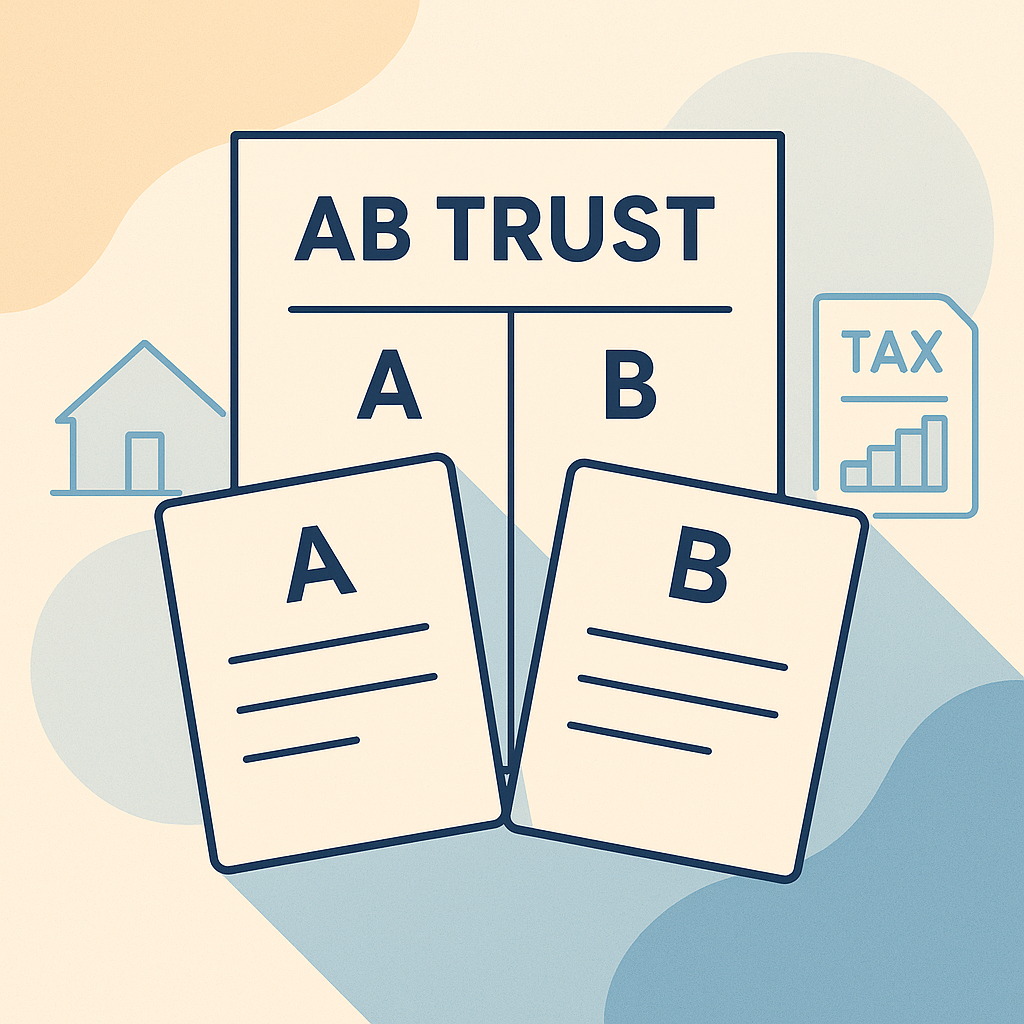
AB Trust
great in 1998… slightly less great in 2025.
Your Old Trust is Outdated: Why You Must Review Your AB Trust in California
For decades, AB Trusts were one of the most common estate planning tools for married couples in California. If you created a trust before 2012—especially in the 1990s or early 2000s—there is a good chance you have an AB Trust (also known as a Bypass Trust or Credit Shelter Trust).
But while AB Trusts made perfect sense under old tax laws, they often create unnecessary complications today. For most families, keeping an old AB Trust in place can lead to significantly higher capital gains taxes, loss of flexibility, and unnecessary administrative complexity.
Here’s a clear breakdown of what an AB Trust is, why it used to be beneficial, and why you should consider a modern restatement if you still have one.
What Is an AB Trust?
An AB Trust is an estate planning structure for married couples that mandatorily splits the trust into two irrevocable subtrusts at the death of the first spouse:
Trust A (Survivor’s Trust): Contains the surviving spouse’s own assets and their share of community property. The surviving spouse keeps full control.
Trust B (Bypass or Decedent’s Trust): Contains the deceased spouse’s share of assets, funded up to the available federal estate tax exemption. The surviving spouse can use the assets for support, but usually cannot change the final beneficiaries or revoke this part of the trust.
This structure "locked up" the deceased spouse’s share to ensure assets ultimately passed to the chosen heirs and, crucially, sheltered the first spouse's tax exemption.
Why AB Trusts Were Extremely Popular in the Past
Before major tax reforms, AB Trusts served two key purposes:
1. They Saved Families From the Old Federal Estate Tax
For many years, the federal estate tax exemption was very low (only $675,000 in 2001). Anything above that limit was taxed at rates up to 55%.
An AB Trust let each spouse use their full exemption. By locking the deceased spouse’s assets in the Bypass Trust, those assets were legally excluded from the surviving spouse’s estate, ensuring neither exemption was wasted. For middle-class California homeowners—especially as property values rose—this was essential.
2. They Protected Children’s Inheritance
In blended families or second marriages, the deceased spouse could ensure their portion of the estate ultimately went to their children, not a new spouse or step-family, by making Trust B irrevocable.
Why AB Trusts Often Hurt Families Today
Since 2011, estate tax laws have changed so dramatically that AB Trusts are rarely beneficial and, in many cases, costly.
1. The Estate Tax Exemption Is Now Extremely High (and Portable)
Due to changes in federal law, the estate tax exemption is massive, rendering the mandatory split obsolete for the vast majority of estates:
2025 Federal Exemption: $13.99 million per person (or $27.98 million per married couple).
Portability: The surviving spouse can now claim the deceased spouse’s unused exemption (known as the Deceased Spousal Unused Exclusion, or DSUE) simply by filing an estate tax return (Form 706). This achieves the same estate tax-saving goal as the AB Trust, but without the administrative burden or the capital gains tax problem.
Result: Over 99% of Californians no longer need an AB Trust for estate tax reasons, and the expensive, rigid Bypass Trust is unnecessary.
2. AB Trusts Often Cause Higher Capital Gains Taxes
This is the biggest modern problem.
Assets that pass directly to the surviving spouse or stay in a flexible joint trust (Survivor's Trust) typically receive a full step-up in tax basis when the first spouse dies, and critically, a second step-up when the second spouse dies. This second step-up eliminates capital gains tax on appreciation up to the second date of death.
But with an AB Trust:
Assets in Trust B (Bypass Trust) do NOT receive a second step-up at the second spouse’s death.
This means the children inherit the assets at the valuation from the date of the first spouse's death, creating tens or hundreds of thousands in avoidable taxable gains when they sell appreciated property.
3. Administrative Requirements Are Complicated and Costly
An AB Trust requires the surviving spouse to:
Perform a mandatory trust split with appraisals upon the first death.
Get a mandatory tax ID number (EIN) for the new, irrevocable Trust B.
File separate, complicated tax returns (Form 1041) for Trust B every year for the rest of their life.
Follow rigid rules and keep detailed accountings for the assets in Trust B.
This can be stressful, expensive, and unnecessary, costing thousands of dollars in CPA and legal fees.
What Does a Modern Restatement Fix?
A restated trust can remove the mandatory A/B split and replace it with a modern, flexible structure, such as a Disclaimer Trust.
Disclaimer Trust: This structure leaves everything to the surviving spouse by default (securing the full capital gains step-up) but allows the surviving spouse to "disclaim" a portion of the assets into an irrevocable trust only if future tax laws require it. This gives maximum flexibility and tax efficiency.
A restated trust can achieve the following:
Remove the mandatory A/B split.
Allow a full step-up in basis on all assets at the second death, eliminating capital gains for heirs.
Simplify tax reporting and eliminate costly annual CPA fees.
Increase flexibility for the surviving spouse.
Maintain inheritance protections, if desired (e.g., blended families), using different, modern methods.
Final Thought: AB Trusts Are a Piece of History—Not a Modern Solution
AB Trusts once protected California families from huge tax bills. Today, due to portability and the high federal exemption, they often create more harm than good by causing avoidable capital gains tax liabilities.
If you still have an old AB Trust, a review with an estate planning attorney can prevent future tax surprises, administrative headaches, and inheritance complications. A simple restatement can save your family time, money, and stress.
⚠️ Legal Disclaimer: The information provided is for informational and educational purposes only and does not constitute legal advice. You must consult with a qualified attorney licensed in California for advice specific to your estate plan and legal documents.