
“Ya Se Sabe” Is Not an Estate Plan: Protecting the Family Legacy
In recognition of National Hispanic Heritage Month, we are reflecting on the homes, businesses, traditions, and sacrifices that carry a family’s story from one generation to the next. Although this story centers on a Hispanic family, discomfort around death and inheritance crosses cultures, religions, and generations. The following fictional story illustrates what can happen when a family’s shared understanding is never put into a legally effective plan.
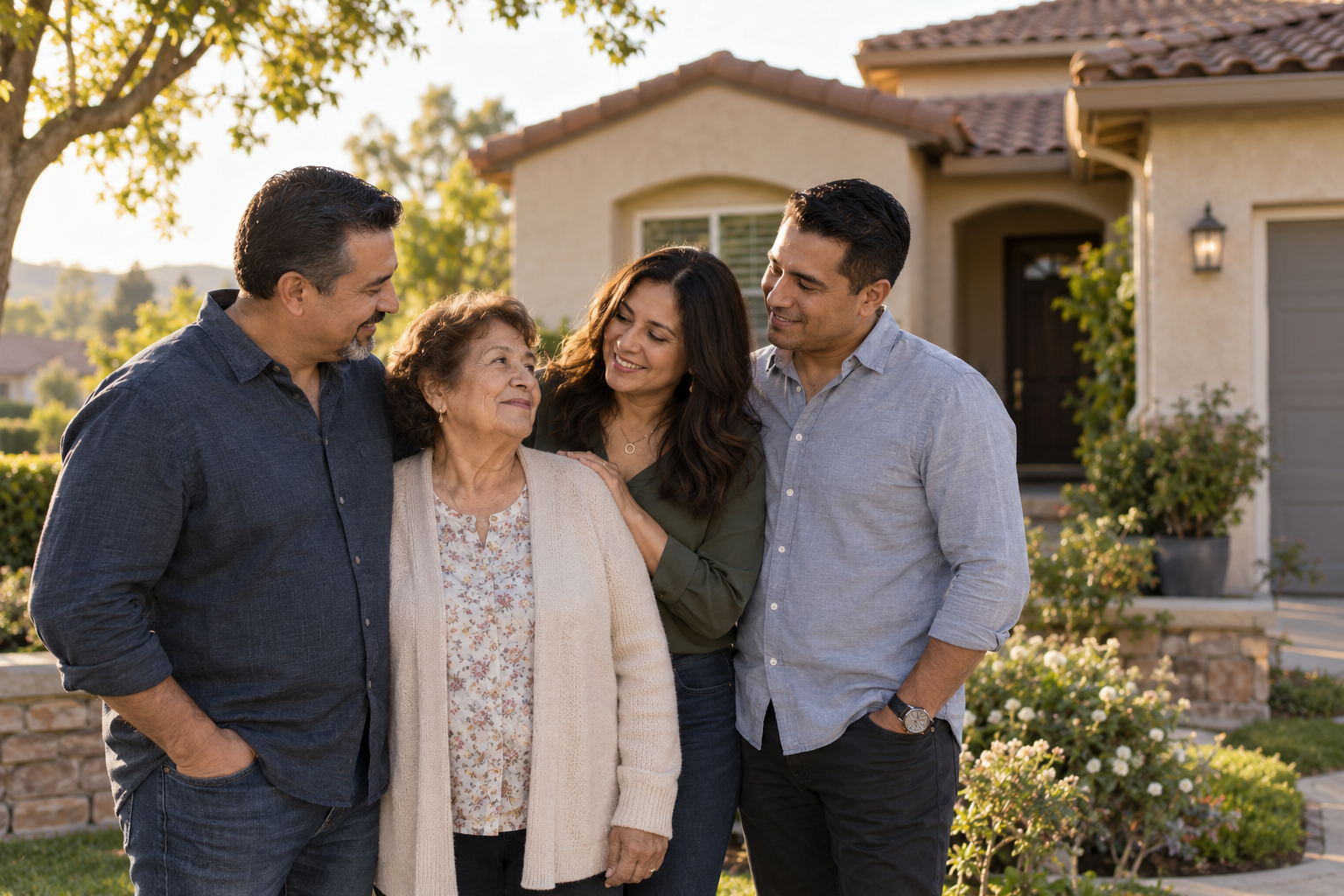
For thirty-four years, the house on Vía Del Norte in Temecula was simply la casa de mamá—Rosa’s house.
Rosa and her late husband bought it in 1992, when the Temecula Valley was still mostly vineyards and open hillsides. They raised four children there, and over the years, the house grew with the family rather than being left behind by it.
Her son Miguel helped add a room above the garage when his first child was born. Her daughter Elena moved back in with her two children after a divorce, “just for a little while,” which quietly became eleven years. Even her youngest daughter, Sonia, who had relocated to Texas for work, still called it home whenever she returned for the holidays.
Everyone understood what was supposed to happen someday. Elena and Miguel would keep the house in the family. Perhaps they would own it together, or one would eventually buy out the other. Sonia had built a life in Austin and did not need the house. Their brother David had lived out of state for years and rarely visited.
Nobody thought they needed to put any of this in writing. Whenever the subject came up at Sunday dinner, Rosa would say, ya se sabe—everyone already knows.
Elena tried a few times to take the conversation further. She had read about wills and living trusts and gently suggested that they sit down with Rosa to make her wishes official. Rosa waved her off. Talking about a will felt like talking about death, and talking about death felt like inviting it.
Miguel agreed with his mother, half-joking that Elena was being morbid. The conversation ended, as it always did.
No one was trying to be irresponsible. Pressing the issue felt uncomfortable and possibly disrespectful. Besides, Rosa was healthy.
They believed there would be more time.
Then, this past spring, there wasn’t.
Rosa died unexpectedly after suffering a stroke. She did not have a will or a trust. In that moment, California law stepped in to make the decisions her family had never formally made.
What “Everyone Already Knows” Means Under California Law
When someone dies in California without a valid estate plan, the estate is not distributed according to family conversations, informal promises, or what everyone understood the person wanted.
Instead, California’s intestate succession laws determine who inherits.
Assuming Rosa owned the entire house at her death, had not remarried, and all four children survived her, each child would be entitled to an equal share of the property through her probate estate. Elena, Miguel, Sonia, and David would each receive a one-quarter interest—regardless of who lived in the home, who helped maintain it, or who believed the house had been promised to them.
California law does not automatically give Elena a larger share because she lived with Rosa for eleven years. Miguel does not automatically receive credit because he contributed labor or money to improve the property. Sonia and David do not inherit less because they live elsewhere or already own homes of their own.
After probate, the four siblings could end up owning the house together as tenants in common, each with the same legal ownership rights.
That may sound manageable because they are family. But shared ownership can become difficult when siblings do not share the same goals.
Elena and Miguel want to keep the house. Sonia and David want to receive their inheritance in cash. To make that happen, Elena and Miguel would need to purchase their siblings’ interests—potentially requiring hundreds of thousands of dollars they do not have.
If the siblings cannot agree, any co-owner may generally seek a partition of the property through the court. A partition action can ultimately result in the property being sold and the proceeds divided, even if some family members desperately want to keep the home.
Nobody wants to become “that sibling.” But without a plan, Rosa’s children have been placed in a situation where someone may eventually feel they have no other choice.
The Property-Tax Issue Waiting Behind the Family Conflict
Even if the four siblings could agree about what to do with the house, they would still have another important issue to address: property taxes.
Because Rosa owned the property for decades, its Proposition 13 taxable value may be far below its current market value. Proposition 19 significantly limits the circumstances in which children can inherit a parent’s home without a substantial property-tax reassessment.
For the parent-child exclusion to apply to Rosa’s principal residence, at least one eligible child generally must use the property as that child’s own principal residence. To receive the exclusion beginning as of Rosa’s death, the child generally must move into the home and file for the homeowners’ exemption within one year. The appropriate Proposition 19 claim must also be filed with the county assessor.
The amount that can be excluded is limited. For transfers occurring from February 16, 2025, through February 15, 2027, the calculation uses an adjusted exclusion amount of $1,044,586 in addition to the property’s factored base-year value. If the home’s fair market value exceeds that combined amount, the excess is added to the property’s taxable value.
But Rosa’s family faces another potential reassessment problem even if Elena or Miguel timely moves into the home and the initial inheritance qualifies under Proposition 19.
Suppose all four children inherit equal one-quarter interests and Elena and Miguel later purchase Sonia’s and David’s shares. The original inheritance was a transfer from parent to children. The later buyout, however, would be a transfer between siblings—and Proposition 19 does not provide an exclusion for sibling-to-sibling transfers.
As a result, the interests purchased from Sonia and David could be reassessed based on their fair market value at the time of the buyout. If Elena and Miguel together acquire the one-half interest belonging to their two siblings, that acquired one-half interest may be reassessed even though the remaining interests continue to receive the benefit of the earlier parent-child exclusion. The house could therefore end up with a blended taxable value: one portion based on the protected or partially protected inherited value and another portion based on the value established when the sibling buyout occurred.
The timing and structure of the distribution can matter. In some circumstances, an executor or trustee with appropriate authority may make a non-pro-rata distribution—such as allocating the home to one beneficiary and other estate assets of equivalent value to the others—without first distributing fractional interests that must later be transferred between siblings. But that option depends on the language of the estate-planning document, the value and composition of the estate, and how the equalization is funded. It generally cannot be recreated after the property has already been distributed in equal shares simply by characterizing a later sibling buyout as part of the inheritance.
A late Proposition 19 filing may provide prospective relief in some circumstances, but it can still result in higher property taxes for an earlier period. These are complicated and time-sensitive decisions for a family to confront while grieving, administering a probate estate, and trying to decide whether anyone can afford to keep the home.
What a Living Trust Could Have Changed
A revocable living trust would not have solved every financial or property-tax issue automatically. But a properly drafted and funded trust could have allowed Rosa to decide what should happen and could have given her trustee greater flexibility in carrying out that decision.
For example, Rosa could have:
Directed that the house be distributed to Elena and Miguel rather than equally among all four children;
Authorized the trustee to make non-pro-rata distributions using other trust assets to equalize the children’s inheritances;
Given Elena and Miguel the first opportunity to purchase the house or their siblings’ beneficial interests;
Established a method for valuing the property and determining the buyout amount;
Allowed a buyout to occur over time rather than requiring immediate payment;
Directed the trustee to sell the home if Elena and Miguel could not complete the purchase;
Explained whether Miguel should receive consideration for any documented contributions to the property; or
Created another arrangement reflecting her priorities and her family’s actual circumstances.
The distinction between these options matters. If the house were first distributed to all four children and Elena and Miguel later purchased the other two interests, the sibling-to-sibling transfers could cause those purchased interests to be reassessed. By contrast, a properly authorized non-pro-rata distribution made during trust or estate administration may allow the house to be allocated directly to one or more children as part of their inheritance, particularly when sufficient other assets are available to equalize the distributions.
Whether a particular arrangement qualifies for favorable property-tax treatment depends on the trust language, the beneficiary’s share of the overall estate, the source of any equalizing payment, and how the transaction is implemented. This is why Proposition 19 planning should happen before death whenever possible—not after fractional interests have already been distributed.
Transferring the home into Rosa’s living trust during her lifetime also could have allowed it to pass without a full probate proceeding. The successor trustee would still need to administer the trust, and the family would still need advice concerning Proposition 19. But they would begin with Rosa’s written instructions and a plan designed around the available options, rather than four different interpretations of what she may have intended.
A Will Alone Might Not Have Been Enough
A will would have been better than silence because it could have stated who Rosa wanted to inherit the house. But a will does not ordinarily keep an estate out of probate.
A will tells the probate court how property should be distributed. A funded living trust generally allows the trustee to administer and distribute trust assets outside the probate process.
That distinction matters when a family’s largest asset is a California home. Probate can involve court supervision, required notices, public filings, statutory procedures, and significant time and expense. A living trust can provide greater privacy and flexibility, but only if it is properly created and the home is actually transferred into it.
Signing a trust and leaving the deed unchanged may not accomplish the intended result.
Estate Planning as an Act of Respect, Not a Bad Omen
National Hispanic Heritage Month celebrates more than history in the abstract. It honors what generations of families have built and carried forward: homes purchased through years of sacrifice, businesses created from the ground up, traditions preserved across borders, and opportunities parents worked to give their children.
For some families, openly discussing death, money, or inheritance can feel uncomfortable, disrespectful, or even like inviting misfortune. Adult children may worry that raising the subject will sound greedy. Parents may fear that creating an estate plan means surrendering control or focusing on death instead of life.
But estate planning can be understood differently.
It is not a prediction or an invitation. It is an act of care—and another way to protect the legacy a family worked so hard to create.
A thoughtful estate plan does more than name beneficiaries. It can preserve family history, explain the meaning attached to important property, provide a fair process when children have different needs, and reduce the likelihood that grieving relatives will be left to negotiate against one another.
It also gives parents the opportunity to explain not only what they want, but why.
Your Family’s Understanding Deserves a Plan
Ya se sabe is a beautiful expression of trust within a family. Under California law, however, it is not an estate plan.
If your family has a home, business, or legacy that “everyone already knows” is supposed to pass a certain way, that understanding deserves to be put into clear, legally effective instructions—while you can still guide the conversation yourself.
You do not need to have every answer before beginning. Part of my role is helping your family identify the decisions that need to be made, understand the available options, and turn what everyone assumes into a plan that will actually work.
If you have been postponing estate planning because it feels uncomfortable or overwhelming, I invite you to schedule a Life & Legacy Planning Session. We will meet you where you are and help you create a plan that reflects what—and who—matters most.
This article provides general educational information and is not legal or tax advice. Estate-planning and property-tax results depend on the particular facts and applicable law. Consult qualified legal and tax professionals regarding your individual circumstances.